
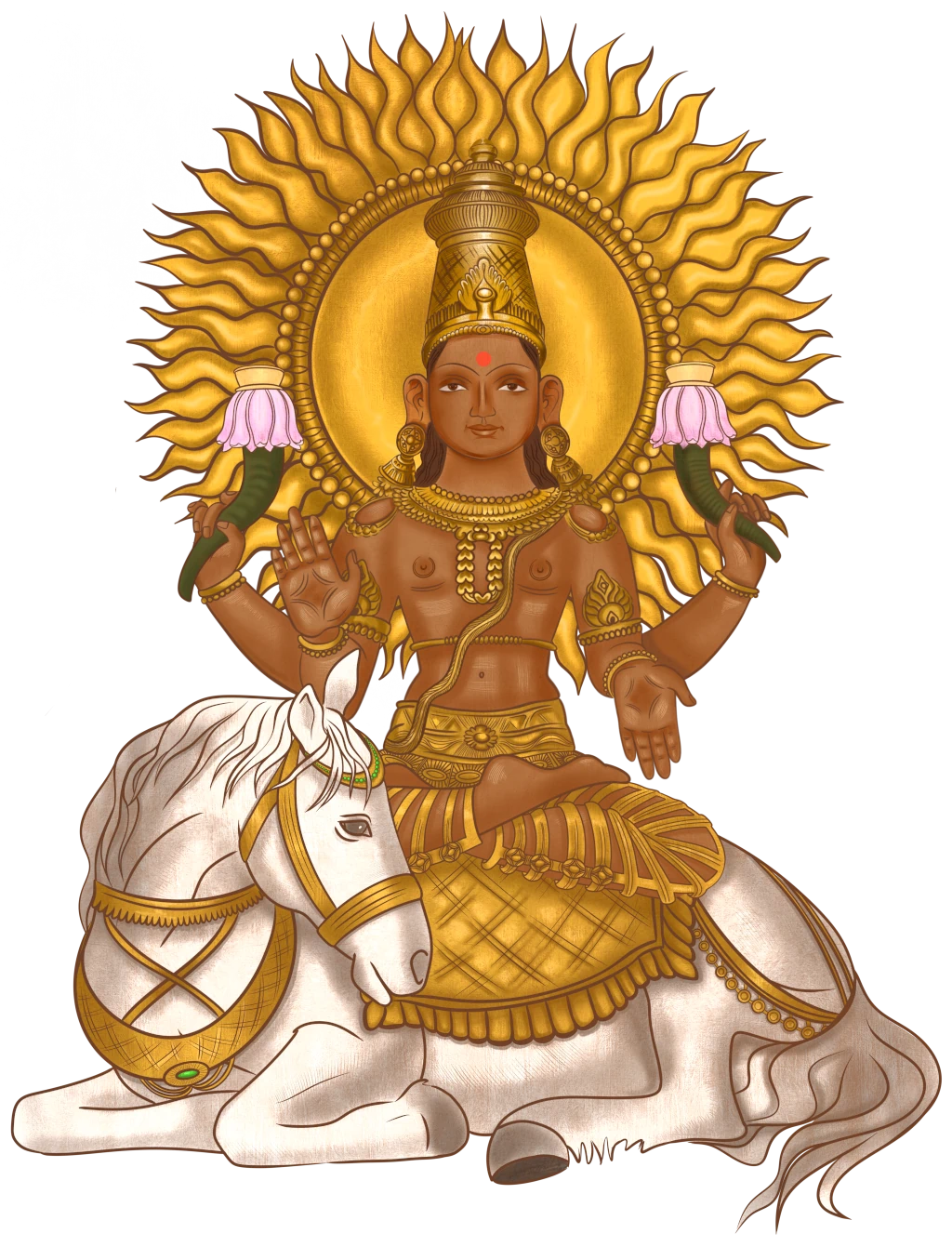
ŚRĪ SŪRYA UTSAVA
Holidays and spiritual festivals play a prominent role in the tradition of worshiping the Sun God. These are important religious and cultural events that shape the rhythm of life for many devotees. They abound in ceremonies and shared rituals. They are deeply embedded within the cycles of nature (prakṛti) and Hindu cosmology. Followers prepare ahead of time with commitment for these events. Festivals are always colorful, full of movement and focus on cheerful and positive aspects. Below there are short descriptions of popular Hindu festivals dedicated to the Sun God.
Sūrya Jayantī, is also known as Ratha Saptamī. It is a holiday dedicated to birthday of the Sun God. Sūrya Jayantī is celebrated during the full moon of Māgha – the eleventh month of the Hindu lunar calendar, which in the Gregorian calendar usually falls between mid-January and mid-February. It is a one-day holiday of key importance in many regions of India, including Maharashtra, Andhra Pradesh, Telangana and Karnataka. During this time, special dishes such as sakkarai pongal (sweet rice) are prepared. The faithful visit temples and make offerings in the form of food and flowers, fill ritual baths, offer war and prayers to Sūrya Deva, who is worshiped as the creator, sustainer and destroyer of the World. Celebrating the birth of the Sun is a key event in Hindu tradition, as it ensures the continuity of the cycle of life. Sūrya Jayantī is celebrated in various regions of India, and its rituals and traditions may vary depending on local customs.
Pongal, also known as Makara Saṅkrānti is the most widely celebrated Hindu festival dedicated to the Sun God. It is celebrated when the Sun transits from Cancer (karkaṭa) to Capricorn (makara), i.e. on the 14th January every year. This festival is important in Hinduism, as it celebrates the moment when the Sun starts to move across the sky to the North. This festival is celebrated as Makara Saṅkrānti with grandeur and ceremony in many parts of India. It is celebrated as Pongal by the Tamils all over the World. During this time, people bathe in holy rivers, give thanks to God for providing a good harvest, and dedicate the first grain to him.
Ćhhath is another Hindu festival dedicated to Surya. It is believed that Karna, the son of the Sun God became a great warrior and fought against the Pāṇḍava in The Kurukshetra War. This festival is celebrated in the month of Kārtika, which in the Gregorian calendar lasts from the middle of October to the middle of November. Kārtika is also known as the month dedicated to the goddess Kārtikeya. She is believed to be the daughter of Sūrya Deva. The festival of Ćhhath is unique to the Indian states of Bihar, Jharkhand and some parts of Uttar Pradesh and Nepal. During this time, people prepare special meals, such as thekua (biscuits made from flour, sugar, raisins and nuts) and kachori (deep-fried stuffed pastry made from flour). They offer this food to God, and visit temples in order to make these numerous offerings.
Samba Daśamī is a holiday celebrated in India, mainly in the coastal state of Odisha and is dedicated to Samba, the son of the god Krishna (kṛṣṇa). Samba suffered from leprosy. Following his father’s advice, he turned to Bhagavāna Sūrya for help. Thanks to offering prayers to him, he was healed from leprosy. From that time, people celebrate Samba Daśamī by wearing traditional attire and take part in many different rituals and ceremonies. In this way, they worship the Sun God and ask him for blessing and protection. On the same day, offerings are made from flowers, fruit and other items. This festival is celebrated during the month of Āśvina (usually in September or October) and normally falls on the tenth day after the new moon – which marks the last day of the festival of Navarātrī, which is dedicated to the Goddess Durgā.
Aytar Pūjā (Āyatara Pūjā) is a holiday celebrated by women in the Indian state of Goa. It falls on the Sunday of the Hindu lunar month known as Śravaṇa – usually in July or August of the Gregorian calendar. The main goal of this ceremonial pūjā is showing respect and worship to the God Sūrya. It includes activities such as: bathing statues, decorating them and worshiping them.
Āditya Vrata is a Hindu festival dedicated to the solar deity Āditya Deva and his energy (śakti). It is a holiday celebrated during the month of Bhādrapada (occurring between August and September in the Gregorian Calendar) and lasts for 12 days. Followers make offerings to the Sun, in order to obtain His blessing and energy. It is a holiday dedicated to health, happiness and prosperity. During Āditya Vrata certain rituals and ceremonies take place in order to honor the Sun God. These include: making offerings, the ceremony of pūjā, practicing cleansing rituals; and being charitable to those in need. It is worth noting that Āditya Vrata is also known as Sūrya Vrata or Āditya Pūjā. Āditya Deva and his wife Rājñī Devī are summoned on these days.